
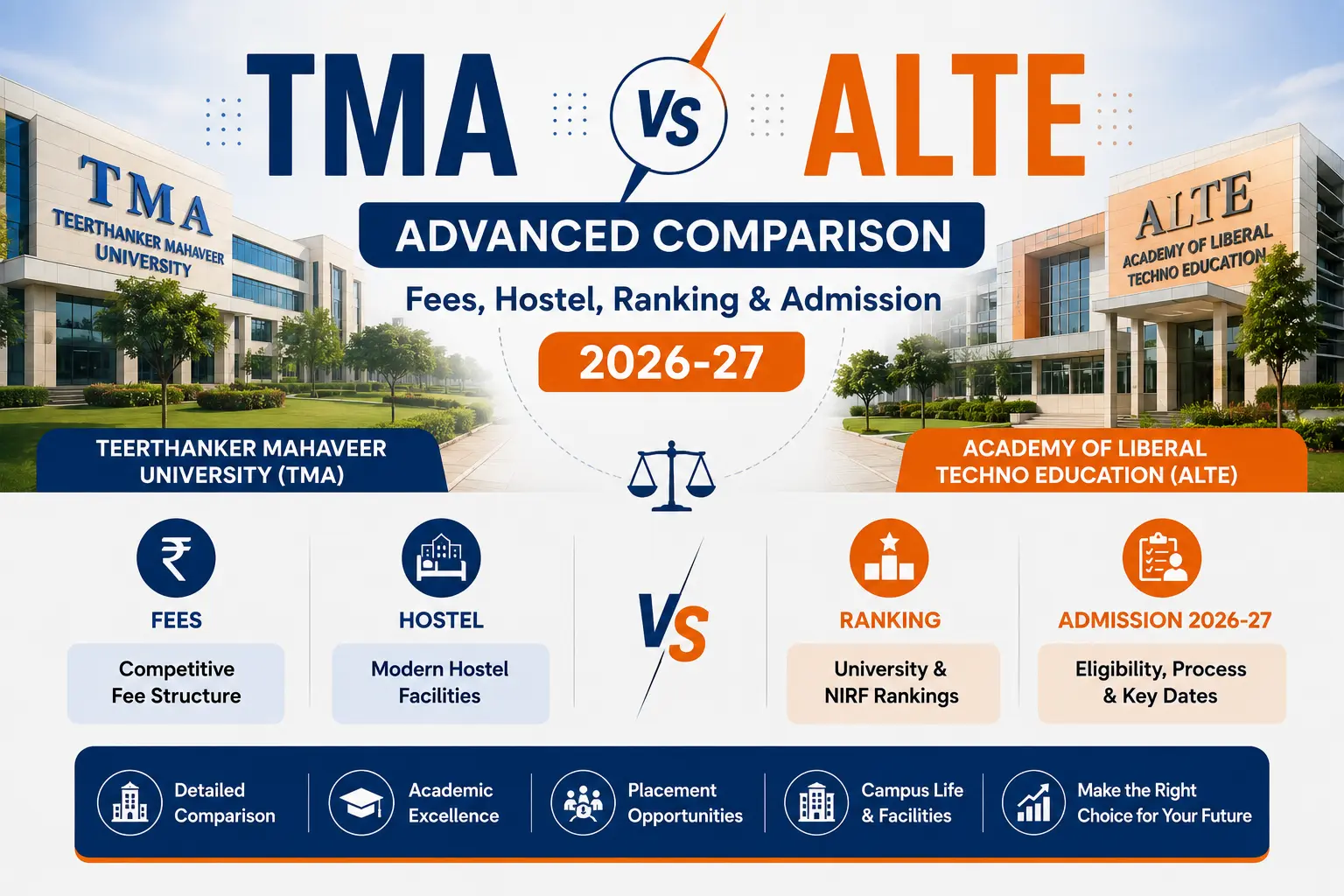
TMA vs Alte University: Ultimate 2026 MBBS Guide
Choosing the right medical university abroad is a monumental decision, both financially and academically. For international medical aspirants—particularly from India, Africa, and the Middle East—Georgia has cemented its position as the ultimate hub for affordable, high-quality medical education. As we approach the 2026-27 intake, two names dominate the conversation for their distinct approaches to medical pedagogy: Petre Shotadze Tbilisi Medical Academy (TMA) and Alte University (ALTE).
As an AI analyzing global admission trends, tuition inflation, and licensing exam success rates, I’ve compiled this exhaustive, data-driven comparison. We will dissect everything from granular fee structures and hostel environments to clinical exposure and USMLE/NExT preparation. Whether you are at the top of the funnel just discovering Georgia, or at the bottom of the funnel ready to pay your application fee, this guide will provide the absolute clarity you need.
Table of Contents
- The 2026 Medical Rush: Why Georgia?
- TMA vs ALTE: The Executive Summary
- Deep Dive: Petre Shotadze Tbilisi Medical Academy (TMA)
- Deep Dive: Alte University School of Medicine
- The Financial Showdown: 2026-27 Fees Compared
- Hostels and Student Life: Your Home Away From Home
- Rankings, Accreditations & Global Validity
- The NExT and USMLE Race
- Expert Insights: 2026 Admission Trends
- Final Conclusion: Which University Is Best For You?
- Frequently Asked Questions (FAQs)
1. The 2026 Medical Rush: Why Georgia?
Before pitting TMA and ALTE against each other, it is crucial to understand the macro-environment of 2026. Why are thousands of students bypassing traditional European destinations for Tbilisi?
First, the cost-to-value ratio is unmatched. With tuition ranging from $5,000 to $8,000 per year, Georgia offers a globally recognized MD degree (equivalent to MBBS) for a fraction of the cost of private medical colleges in India or universities in the West. Second, the language barrier is non-existent in the classroom; both TMA and ALTE offer fully English-medium programs tailored for international cohorts. Finally, the safety index in Georgia remains exceptionally high, a critical factor for parents sending their children abroad.
However, not all Georgian universities are created equal. Your medical career will be significantly impacted by your decision between a rapidly expanding, multidisciplinary campus like ALTE and a boutique, specialized academy like TMA.
2. TMA vs ALTE: The Executive Summary
Here is a high-level contextual matrix that compares the two colleges for the 2026–2027 academic year for individuals who require the important facts right away.
| Feature | Tbilisi Medical Academy (TMA) | Alte University (ALTE) |
|---|---|---|
| Established | 1992 | 2002 (Formerly Tbilisi Open Univ.) |
| Institution Type | Specialized Boutique Medical Academy | Modern Multi-Disciplinary University |
| Annual Tuition (2026) | ~$7,000 USD | ~$5,500 USD |
| Total 6-Year Tuition | $42,000 USD | $33,000 USD |
| Batch Size | Small, intimate (high student-teacher focus) | Medium (15:1 Student-to-Teacher Ratio) |
| Core USP | Early clinical exposure (Year 1), strict pedagogy | Affordability, modern infra, tech-driven labs |
| Hostel Fees (Yearly) | ~$2,500 USD | ~$2,950 USD |
| Target Student | Traditionalists seeking intense, focused learning | Budget-conscious students wanting a “campus vibe” |
The Immediate Takeaway: If your primary concern is budget and a modern university atmosphere, ALTE wins. If you are willing to pay a premium for smaller batch sizes, specialized medical traditions, and early hospital exposure, TMA is your destination.
3. Deep Dive: Petre Shotadze Tbilisi Medical Academy (TMA)
Petre Shotadze Tbilisi Medical Academy (TMA) operates on a distinct philosophy: medicine is an apprenticeship. Founded by eminent Georgian physicians, TMA does not try to be a massive commercial university; it is a dedicated academy solely focused on crafting competent doctors.
Academic Philosophy & Pedagogy
TMA’s curriculum is heavily aligned with the Bologna Process and ECTS standards, making it highly compatible with European medical guidelines. TMA is unique in that it rejects the conventional “two years of purely textbook learning” paradigm.
At TMA, you aren’t just sitting in lecture halls memorizing Gray’s Anatomy. The academy utilizes small-group teaching. When you have a smaller cohort, professors can actually ensure that every individual student knows how to palpate an abdomen or read an ECG properly. The pedagogy here is intense, rigid, and deeply traditional, which is exactly what many strict medical licensing boards prefer.
Early Clinical Exposure
TMA’s defining competitive advantage in 2026 is its early clinical rotations. While many universities limit first and second-year students to simulation labs and cadavers, TMA integrates basic clinical shadowing incredibly early.
- Year 1-2: Focus on Basic Medical Sciences (Anatomy, Physiology, Histology) combined with introductory clinical skills in simulation centers.
- Year 3-6: Full immersion in the Faculty of Clinical Medicine and Faculty of Surgery. TMA is associated with top multispecialty hospitals across Tbilisi, allowing students real-life exposure to patient management, surgical observation, and emergency treatments.
TMA is best for: The highly disciplined student who wants a tight-knit community and is focused entirely on the clinical practice of medicine rather than university social life.
4. Deep Dive: Alte University School of Medicine
Alte University (formerly known as Tbilisi Open University) represents the new wave of Georgian medical education. It is aggressive, rapidly expanding, technologically advanced, and highly competitive in its pricing. With a total student body of around 3,000 (60% being international), ALTE offers a bustling, multicultural campus experience.
Modern Infrastructure & Growth
ALTE has poured massive capital into its School of Medicine. The infrastructure is distinctly modern. Classrooms are equipped with high-speed Wi-Fi, modern microscopes, built-in projectors, and state-of-the-art simulation labs. ALTE understands that 21st-century medicine relies heavily on technology, and their campus reflects that.
Furthermore, because ALTE hosts faculties in Business, Law, Computer Science, and AI, medical students get to interact with a diverse peer group. This multi-disciplinary environment fosters a classic “university experience” that a specialized academy cannot provide.
The Multispecialty Edge & Partnerships
ALTE maintains a strict 15:1 student-to-teacher ratio to ensure quality control amidst its growth. Their clinical training is bolstered by exclusive partnerships with some of Georgia’s largest healthcare providers. For a tuition fee of just $5,500 per year, the sheer volume of resources ALTE provides is staggering. They also heavily emphasize extracurriculars, mandating sports and hosting weekend seminars on the latest medical research to ensure holistic student development.
ALTE is best for: The student who wants exceptional value for money, modern technological integration, and a vibrant, diverse international campus life.
5. The Financial Showdown: 2026-27 Fees Compared
Let’s talk numbers. The financial commitment is often the deciding factor at the bottom of the admissions funnel. Both universities offer great value, but the gap over six years is substantial.
Tuition Breakdown (Estimated for 2026)
| Expense Category | TMA (USD) | ALTE (USD) | Difference (USD) |
|---|---|---|---|
| Year 1 Tuition | $7,000 | $5,500 | TMA is $1,500 more |
| Year 2-6 Tuition | $7,000/yr | $5,500/yr | TMA is $1,500 more/yr |
| Total 6-Year Tuition | $42,000 | $33,000 | $9,000 Difference |
| Equivalent in INR | ~₹35.2 Lakhs | ~₹27.7 Lakhs | ~₹7.5 Lakhs difference |
Note: Currency conversions are approximate and subject to forex fluctuations.
Cost of Living in Tbilisi
Because both TMA and ALTE are located in Tbilisi, the baseline cost of living is identical. While inflation has gently nudged prices up globally, Tbilisi remains one of Europe’s most affordable capitals.
- Accommodation: $150 – $300 per month (depending on shared vs. private).
- Food & Groceries: $100 – $150 per month (Indian mess facilities are widely available and cost around $100-$120/month).
- Transportation: $10 – $20 per month (The Tbilisi Metro is highly efficient).
- Utilities & Misc: $30 – $60 per month.
Total Living Cost: Expect to spend roughly $250 – $350 per month on living expenses, translating to about $3,000 – $4,200 annually.
The Financial Verdict: Choosing ALTE saves you approximately $9,000 over the course of your degree. For many middle-class families, that $9,000 is enough to cover nearly three full years of living expenses in Georgia. You must ask yourself: Does the boutique, specialized nature of TMA justify a 27% premium on tuition?
6. Hostels and Student Life: Your Home Away From Home
Where you sleep and study is just as important as where you attend lectures. Both universities cater heavily to international students, offering dedicated accommodations.
TMA Accommodation
TMA’s university hostels cost roughly $200–$250 per month (approx. $2,500/year). The vibe here is focused and disciplined. Because the academy is smaller, the hostels feel more like a dedicated medical fraternity. It is quiet, geared toward heavy study sessions, and offers high security. By Year 2 or 3, however, about 80% of TMA students choose to move out and rent private apartments in Tbilisi for more independence.
ALTE Accommodation
ALTE offers robust hostel facilities priced around $2,950 per year. While slightly more expensive on paper than TMA’s base hostel fees, ALTE’s facilities are incredibly modern. They feature well-furnished rooms, heavy-duty Wi-Fi, centralized heating, laundry, and 24/7 security. Because ALTE is a larger university, the hostel environment is more lively, offering a great chance to build a vast peer network across different nationalities and disciplines.
Indian Food & Community
For Indian students, food is often a major concern. You can breathe easy: both TMA and ALTE have excellent access to Indian food. Hostels either have dedicated Indian mess facilities serving all three meals, or are located near Tbilisi’s vibrant cluster of Indian restaurants and grocery stores. Whether you crave dal makhani or a simple home-cooked meal, you will not go hungry at either institution.
7. Rankings, Accreditations & Global Validity
In the medical world, generic university rankings matter far less than accreditations. A top-ranked multi-disciplinary university is useless if its medical degree isn’t recognized by your home country’s medical council.
The Holy Trinity of Accreditations
Both TMA and ALTE pass the ultimate test. They are fully recognized by:
- WHO (World Health Organization)
- WFME (World Federation for Medical Education)
- NMC (National Medical Commission of India)
- FAIMER / ECFMG (Essential for the USMLE and practicing in the USA)
The Ranking Nuance
If you look at generic rankings like EduRank or UNIRANKS for 2026, ALTE generally scores higher as a comprehensive institution (often sitting around the Top 2 or 3 private universities in Georgia). TMA, being a specialized academy, naturally ranks lower on general lists (e.g., EduRank #35 in Georgia).
However, do not let generic rankings fool you. In clinical circles, TMA’s reputation is ironclad. Medical schools are judged by their hospital affiliations and their graduates’ ability to pass licensing exams, and TMA has historically boasted incredibly strong pass rates.
8. The NExT and USMLE Race
The ultimate goal of studying MBBS abroad is to clear the licensing exam in your target country—whether that is the NExT in India, the USMLE in the USA, or the PLAB in the UK.
- TMA’s Approach: TMA relies on its rigorous, traditional foundation. Because students get hands-on clinical exposure earlier, their practical understanding of pathology and internal medicine is profound. This deep, conceptual grounding makes tackling the clinical vignettes of the USMLE Step 2 highly intuitive.
- ALTE’s Approach: ALTE is highly aggressive and modern in its exam prep. They actively integrate USMLE and NExT-style questioning into their regular curriculum. Their technological infrastructure means students have access to vast digital question banks and simulation software that mimics the exact testing environments of these licensing exams.
Both universities will qualify you to sit for these exams. Your success will depend entirely on your personal discipline and study habits outside of university hours.
9. Expert Insights: 2026 Admission Trends
To provide a 360-degree view, we look at the consensus among top overseas educational consultants handling the 2026 intake.
“In 2026, we are seeing a massive shift towards universities that offer the best ROI. Alte University is capturing a huge segment of the market simply because $5,500 a year for that level of infrastructure is unbeatable. However, for students from a family of doctors who prioritize legacy and intense, intimate clinical training, TMA remains the crown jewel.”
— Global Medical Admissions Consensus, 2026
“Parents are hyper-focused on NExT (National Exit Test) prep. Both TMA and ALTE have adapted beautifully. TMA does it through relentless clinical drilling, while ALTE is utilizing tech-driven mock exams. Neither is a wrong choice; it’s about how the student learns best.”
— Overseas Education Strategist
10. Final Conclusion: Which University Is Best For You?
The decision between Petre Shotadze Tbilisi Medical Academy and Alte University boils down to your budget and your preferred learning environment.
Choose Alte University (ALTE) if:
- You want the absolute best financial value ($5,500/year tuition).
- You thrive in a vibrant, modern, multi-disciplinary campus environment.
- You prefer learning with the latest digital tools, smart classrooms, and high-tech simulation labs.
- You want a diverse, large-scale international student network.
Choose Tbilisi Medical Academy (TMA) if:
- You can afford the $7,000/year tuition comfortably.
- You prefer small batch sizes and highly personalized attention from professors.
- You want to start your clinical hospital rotations and shadowing as early as Year 1.
- You are looking for a quiet, deeply focused, “medicine-only” academic atmosphere.
Both institutions will grant you a globally recognized MD degree, both will keep you safe in the beautiful city of Tbilisi, and both will set you on the path to becoming a licensed physician. Assess your finances, understand your learning style, and make the leap.
11. Frequently Asked Questions (FAQs)
Q1: Is NEET mandatory for Indian students applying to TMA or ALTE in 2026?
A: Yes, absolutely. For Indian citizens, qualifying the NEET exam is legally mandatory to study MBBS abroad if you intend to return to India and practice medicine.
Q2: Are the degrees from TMA and ALTE recognized globally?
A: Yes. Both universities hold accreditation from the WHO, WFME, FAIMER, and the NMC (India). Graduates can sit for the NExT (India), PLAB (UK), and USMLE (USA).
Q3: What is the medium of instruction? Will I need to learn Georgian?
A: The entire 6-year MBBS program at both TMA and ALTE is taught 100% in English. However, you will be taught basic conversational Georgian during your first two years so you can comfortably interact with local patients during your hospital rotations.
Q4: Which university has better hostel facilities?
A: Both offer secure, well-maintained hostels. ALTE’s hostels are slightly more modern and have a larger, more diverse student population, costing around $2,950/year. TMA’s hostels are slightly cheaper ($2,500/year) and offer a quieter, more focused environment.
Q5: Is Indian food easily available near these universities?
A: Yes. Both universities are in Tbilisi, which has a thriving Indian community. You will have easy access to Indian messes (approx. $100-$150/month), Indian grocery stores, and restaurants.
Q6: Can I work part-time while studying MBBS in Georgia?
A: While your student visa may legally allow limited part-time work, it is highly discouraged. Medical studies (especially in the first three years) are exceptionally demanding, and taking on a job will likely cause your academic performance to suffer.
Q7: How do I travel from India to Tbilisi?
A: There are multiple connecting flights from major Indian cities (Delhi, Mumbai, Bangalore) to Tbilisi International Airport (TBS), usually routing through the Middle East (Dubai, Doha, or Sharjah).
Read Also:
- Tbilisi State Medical University (TSMU) vs Tbilisi Medical Academy (TMA)
- Tbilisi State Medical University vs University of Georgia (UG)
- Tbilisi State Medical University (TSMU) vs Alte University
- Tbilisi State Medical University (TSMU) vs Georgian American University (GAU)
- Tbilisi State Medical University (TSMU) vs Kenwalker International University (KWIU)
- Petre Shotadze Tbilisi Medical Academy (TMA) vs the University of Georgia (UG)
- Tbilisi Medical Academy vs Georgian American University
- Tbilisi Medical Academy vs Kenwalker International University
- University of Georgia vs ALTE University
- University of Georgia vs Georgian American University
- University of Georgia vs Ken Walker International University
- ALTE vs Kenwalker International University
- Georgian American University vs Kenwalker International University